The Most Worshipful Grand Lodge
of the Ancient and Honorable Fraternity of Free and Accepted Masons of the State of New Hampshire is one of the oldest in the country, it being the 10th one formed in the original colonies. It also has the distinction of being the 14th Grand Lodge to be formed, world-wide. On July 8, 1789, five Freemasons met on the third floor of the William Pitt Tavern in Portsmouth, NH for the purpose of agreeing on the creation of a Grand Lodge for the state. Those in attendance were Brothers Hall Jackson, Joseph Bass, Nathaniel Folsom and Nathaniel Adams from St. John´s Lodge in Portsmouth, and Brother Alpheus Moore from Rising Sun Lodge in Keene, NH. At this meeting, they formed the Grand Lodge of New Hampshire, elected John Sullivan as the Grand Master, and subsequently held the first communication on July 16, 1789.
Thus was the Grand Lodge formed. However, there was an immediate issue which needed to be rectified. Grand Master-elect John Sullivan had never been a Master of a lodge – one of the immutable requirements to be Grand Master. Recognizing this and reacting quickly, his Lodge (St. John´s of Portsmouth) elected and installed him as Worshipful Master and on April 8, 1790 he was duly installed as the first Grand Master of the Grand Lodge of New Hampshire.
The immediate work of the new Grand Lodge was to contact all other lodges within its jurisdiction and encourage them to recognize the jurisdictional authority of the Grand Lodge. This was accomplished over a period of many years, and as new lodges were formed and petitioned the Grand Lodge for charters, the foundation for Freemasonry within the state became strong.
Although there are many Freemasons living in New Hampshire who moved here from other jurisdictions (and therefore do not show up on the registers of the Grand Lodge) as of May 2005 there were 7800 registered Freemasons belonging to Lodges within the jurisdiction of the Grand Lodge of New Hampshire, distributed among 68 Regular Lodges and 4 Special Lodges.
A History of the William Pitt Tavern
Social life in colonial times was much different than it is today. In most cities and towns, taverns became the hub of colonial social life. The inhabitants could meet with friends, imbibe the spirits and discuss the pressing issues of the day. One such tavern was the Earl of Halifax located in the town of Portsmouth, New Hampshire. At that point in time, Portsmouth was a busy seaport and the capital of the colony of New Hampshire. John Stavers, the owner of the tavern, also offered overnight accommodations for his guests. These accommodations were much different than the ones we know today. The rooms were rather small and each room had one bed to be shared by up to four or five male guests. Women were treated to their own bed but not their own room. John and his brother also owned a stage coach line which ran from Boston to Portsmouth. This gave the visitors of Portsmouth transportation to John’s tavern. John had such great success with the Earl of Halifax, he decided to build a larger tavern to serve and lodge more guests.
He began construction of his new tavern in 1766. Just after construction began, the local Freemasons asked Stavers if he could include a room to house their Lodge for their meetings. After pondering their request, Stavers added a third story to his original plan for this purpose, with the stipulation that his tavern could use the space when the Freemasons were not meeting. Upon completion of the building, John Stavers decided to take the name of his old tavern and name his new tavern the Earl of Halifax.
During this period of time, the English were still trying to subjugate the colonists. The King of England as well as Parliament considered the colonists as their children, and ruled them accordingly. Many men distinguished themselves in defending the colonists as well as the freedoms sought by them. One of these men was William Pitt. Pitt argued before parliament, that England had no right to tax the colonists, although he did believe that England should maintain sovereignty over the colony, and the colonists should enjoy all the same freedoms that every Englishman enjoyed. The colonists he asserted are being taxed without representation, and that the King and Parliament did not represent the colonists. Many of the colonists became endeared with Pitt and his ideology. And so just prior to the outbreak of the American Revolution, John Stavers renamed his Earl of Halifax Tavern, the William Pitt Tavern.
The war took its toll on the Town of Portsmouth. The Royal Governor, John Wentworth left the colony. The provisional government moved the capital to Exeter, New Hampshire, and the economy suffered because trade with England ended. The taverns owned by John Stavers also began their decline. The Freemasons continued to meet at the William Pitt Tavern. In fact in 1789, five Masons met at the tavern and formed the Grand Lodge of New Hampshire. The Grand Lodge of New Hampshire as well as St. John’s Lodge continued meeting there until 1792, when both found new accommodations for their meetings.
After the death of John Stavers, his daughters kept the tavern operating for a time, and shortly thereafter it closed. In subsequent years the building became a boarding house and afterwards, apartments. By the 1950’s, the building was in a state of disrepair. It wasn’t until 1965, that Strawbery bank Museum was charged with preserving Portsmouth’s historic district. The William Pitt Tavern was one of the first structures on their list to be restored and preserved. When a Masonic affiliation was discovered, the Grand Lodge of New Hampshire was asked if they would be interested in taking part in the restoration. The Grand Lodge of New Hampshire enthusiastically agreed, and raised a large portion of the funds used to restore the tavern to its former beauty. To this day, the Grand Lodge of New Hampshire continues its support for the William Pitt Tavern.
Military Lodges in the State of New Hampshire
Throughout time, Freemasons that were deployed in the military and serving their country in foreign lands would often times attend civilian Lodges. As far back as the mid 1700’s, Military Lodges were being established through charters issued by the Grand Lodges in England, Ireland and Scotland to accommodate their Masonic soldiers. As the American Colonies entered the Revolutionary War, and our Masonic Brethren were called to arms, ten Military Lodges were chartered by the Colonial Grand Lodges. At the same time, the British also had their own Military Lodges here on American soil. During the war, there were occurrences of Masonic furniture and jewels belonging to the British being captured by the Americans. In an act of Masonic brotherhood they were returned to their rightful owners by honor guards under a truce. It was apparent that Masonic courtesy transcended any conflict that existed during that time.
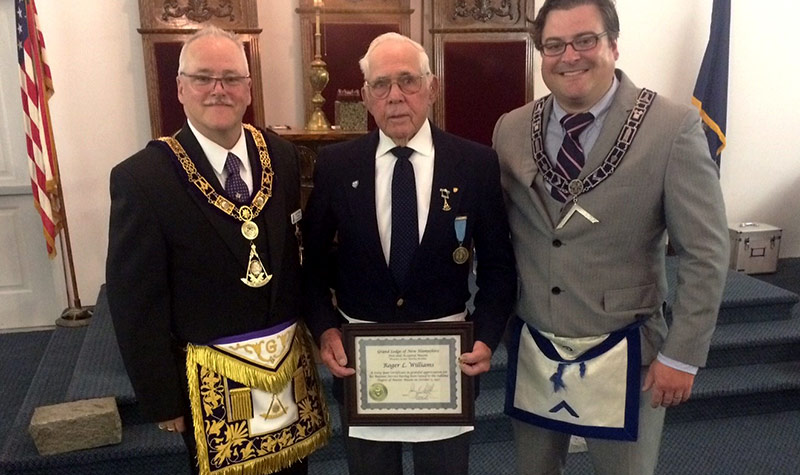
In 1789, the Grand Lodge of New Hampshire was founded. It is not surprising then that there were no Military Lodges chartered by the New Hampshire Grand Lodge prior to that time. From its inception, no war was of such magnitude to necessitate the creation of Military Lodges by the New Hampshire Grand Lodge; until the Civil War. At the Grand Lodge Communication of 1861, Brother J. D. Parker of Star in the East Lodge No. 59 introduced a resolution that authorized the Grand Lodge Officers to grant a dispensation to form a Military Lodge. This Lodge was to be connected to the Second New Hampshire Regiment of Volunteers, and to posses all such powers as are granted to the other Lodges throughout the State. Upon returning from their travels, this Lodge was to also report their doings to the New Hampshire Grand Lodge. At the same communication, Brother Balch moved “that the Most Worshipful Grand Master be authorized, upon proper application therefor, at his discretion, to grant warrants of dispensation to form and open traveling Military Lodges, to be attached to any New Hampshire Regiment about to leave the State, and join the United States troops.”
It was by this authority, that on the 17th of June, 1861, Most Worshipful Grand Master Aaron P. Hughes granted a dispensation to R. W. Brother Thomas Snow and others of the Second Regiment New Hampshire Volunteers to form the first Military Lodge in the State of New Hampshire. This Lodge would be called the “Star Spangled Banner Lodge.” And on the 22nd day of November, 1861, M. W. G. M. Hughes granted a dispensation to Worshipful Brother James Perry and others of the Fifth Regiment New Hampshire Volunteers to form a second Military Lodge called “Hughes Army Lodge.”
Two years later, M. W. G. M. Charles H. Bell issued the following dispensations; to Brothers A. W. Messer and others to establish “Loyal Lodge” to be connected with the Eleventh Regiment of the New Hampshire Volunteers; to Brothers T. A. Barker and others to establish “Comrades Lodge”, in connection with the fourteenth Regiment; and to Brothers Cyrus W. Fisk and others to establish “Citizen Soldiers Lodge” in connection with the sixteenth Regiment New Hampshire Volunteers.
After the war, when the records of these Lodges were submitted to the Grand Secretary, a report was generated by a special committee evaluating the work of the Military Lodges. Military Lodges allowed our Brother Masons to maintain their fraternal bond while serving our country. They encouraged Masonic Brethren to practice and maintain proficiency in their work. They perpetuated the tenets of Freemasonry while our soldiers were far from home, and most of all, comforted them in the arms of the Fraternity.
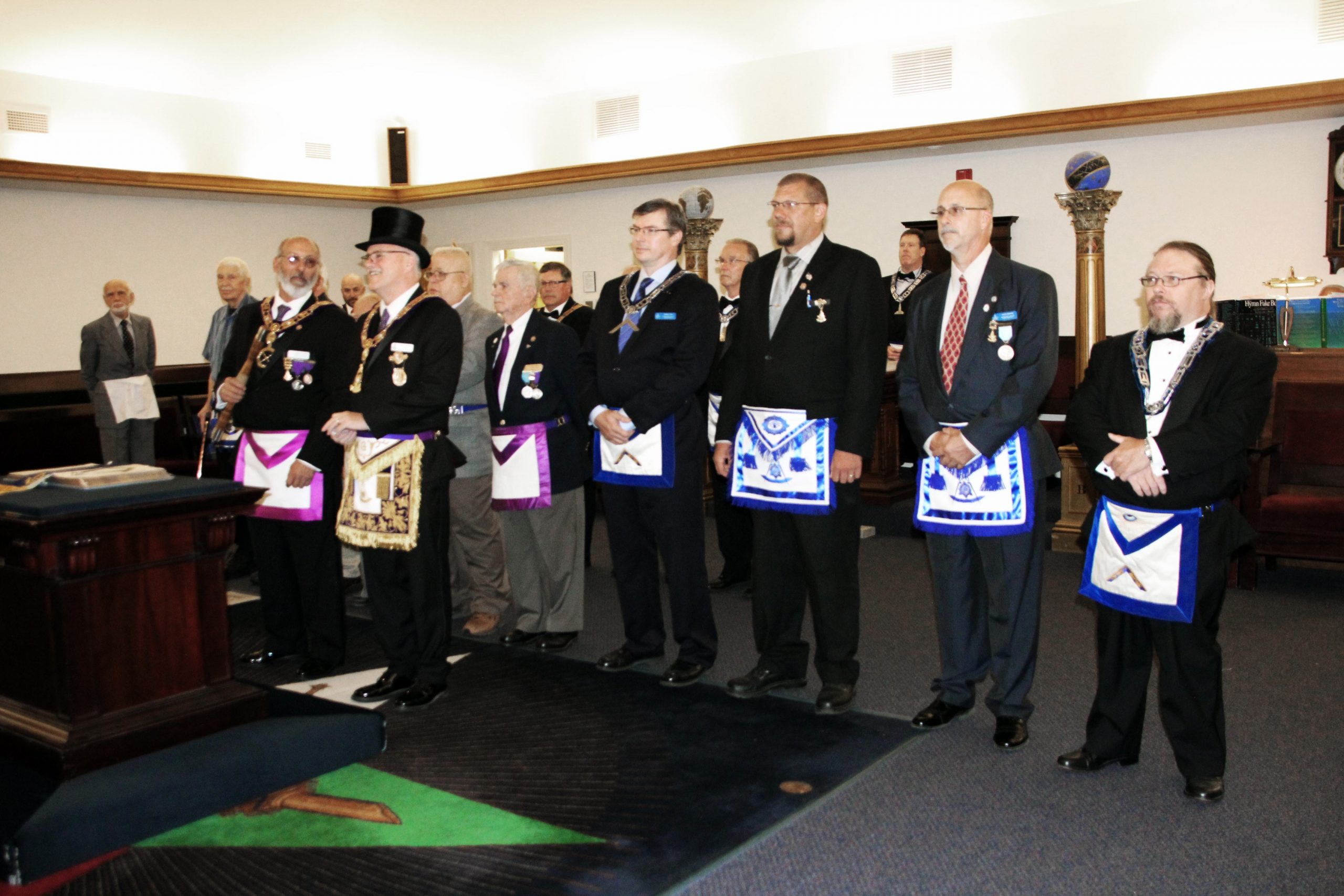
Richard Kelley Grand HistorianEnoch Q. Fellows - New Hampshire Mason & Civil War Veteran
Enoch Q. Fellows was born in Sandwich, New Hampshire on June 20, 1825. He was the son of John Fellows and Polly Quimby. Enoch married later in life to Lydia D. Sanborn on June 20, 1887.
Fellows began his military career in 1844 at West Point Military Academy. He left such a lasting impression that he was remembered in the memoirs of another cadet named John Tidball. It seemed that Enoch refused to take the oath of the cadet. One day the entire academy was assembled to the Superintendent’s house and with great elaboration and formality, Enoch Fellows was called front and center. The other cadets feared that Fellows would be reprimanded for his refusal to take the oath and were prepared to come to his defense. The Superintendent appeared with the entire military and academic staff and presented Fellows with a bible. Fellows, assessing the situation put his hand on the bible and took the oath. Evidently, Enoch’s father John was not pleased that Enoch entered the military, and Enoch was torn between his desires to enter the military and his desire to please his father.
After returning to Sandwich, and upon the petitioning of a new Masonic Lodge in the Town, Enoch Q. Fellows became one of the first members of Red Mountain Lodge # 68. His application was dated August 24, 1859. He entered on September 28, 1859, was passed on July 30, 1860, and was raised on August 27, 1860.
Just after the outbreak of the Civil War, Fellows enlisted in the 1st Regiment of the New Hampshire Volunteers. Because of his West Point training, he entered as a 1st Lieutenant. The regiment did not see any action but they did march through Virginia and Maryland. On August 9, 1861 Fellows mustered out and on the very next day he was promoted to Full Colonel and assigned to the 3rd Regiment, New Hampshire Volunteers. This regiment saw action at South Mountain Maryland and White Sulpher Springs Virginia.
In the summer of 1862, the 9th New Hampshire Regiment was raised and Fellows was assigned Colonel of the regiment. Less than one month later, the 9th regiment found themselves on the battlefield of Antietam, Virginia. The 9th was assigned to General Burnside and took a position opposite the stone bridge over the Antietam Creek on the southern flank of the battlefield.
When the time came, Burnside and his men stormed over the bridge taking heavy fire from the Confederates who were in a position high on the wooded bank across the creek. The 9 was one of the first regiments over the bridge. The fighting continued on for most of the day. Burnside and his men had pushed the hard fighting southerners almost all the way to Sharpsburg when Confederate General Lee
sent reinforcements to their aid and forced Burnside and his men back over the
bridge. As night settled in the battle lines were virtually unchanged from earlier
in the day.
The next day a truce was called and each side gathered their dead
and wounded soldiers. Ultimately, General Lee had determined he was greatly
outnumbered and on the second night under the cover of darkness quietly
retreated with his men back over the Potomac into Virginia. The North had
declared a great victory but most historians call the battle of Antietam a draw.
Brother Fellows was discharged with a medical disability on November 21, 1862. The reason cited was rheumatism. Upon returning to Sandwich, he held the position of Treasurer of Red Mountain Lodge # 68 for many years. He also liked to refer to himself as a “Capitalist.” On May 6, 1897, Brother Enoch Q.
Fellows entered into the Celestial Lodge above leaving a void in the lives of all
who knew him.